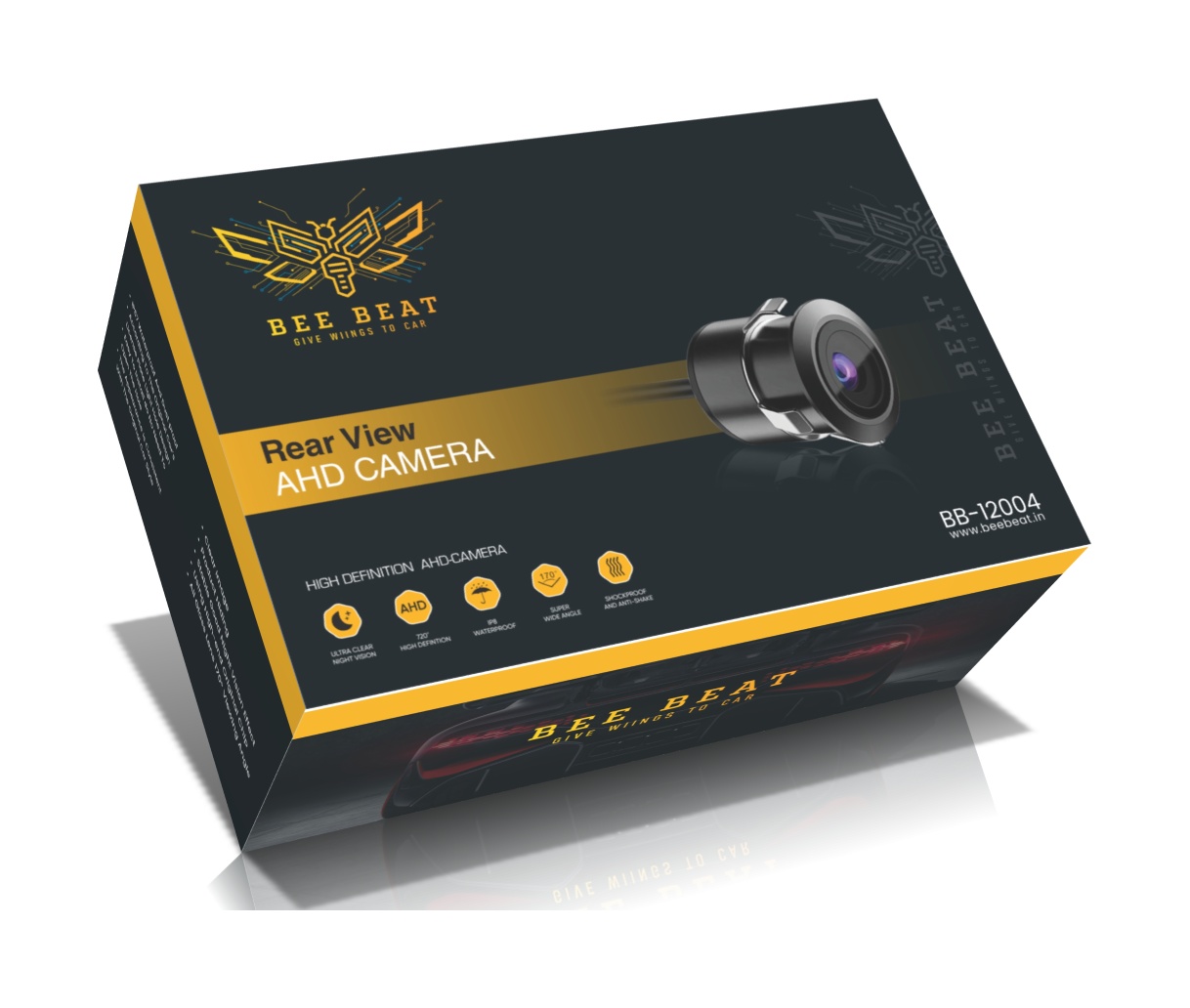
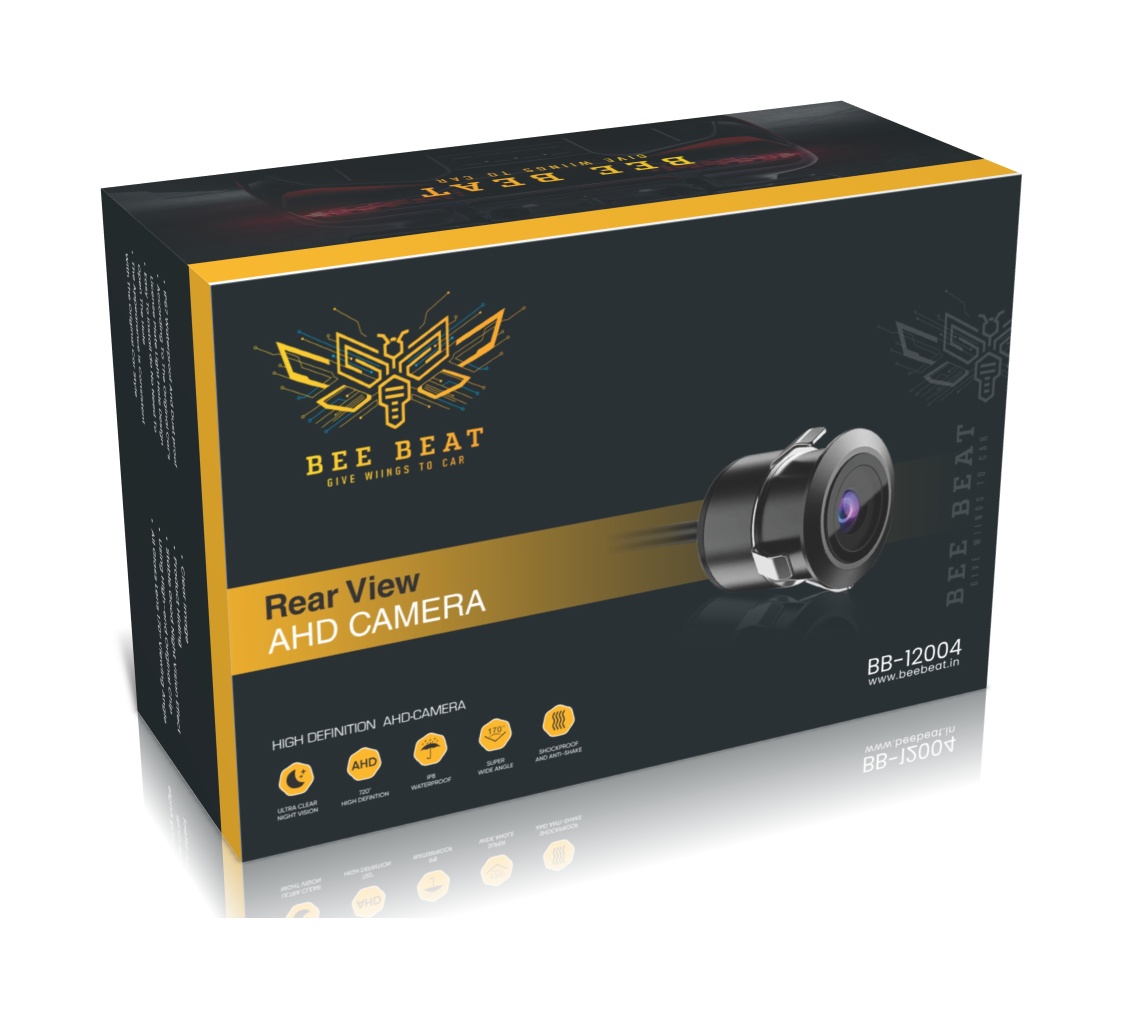
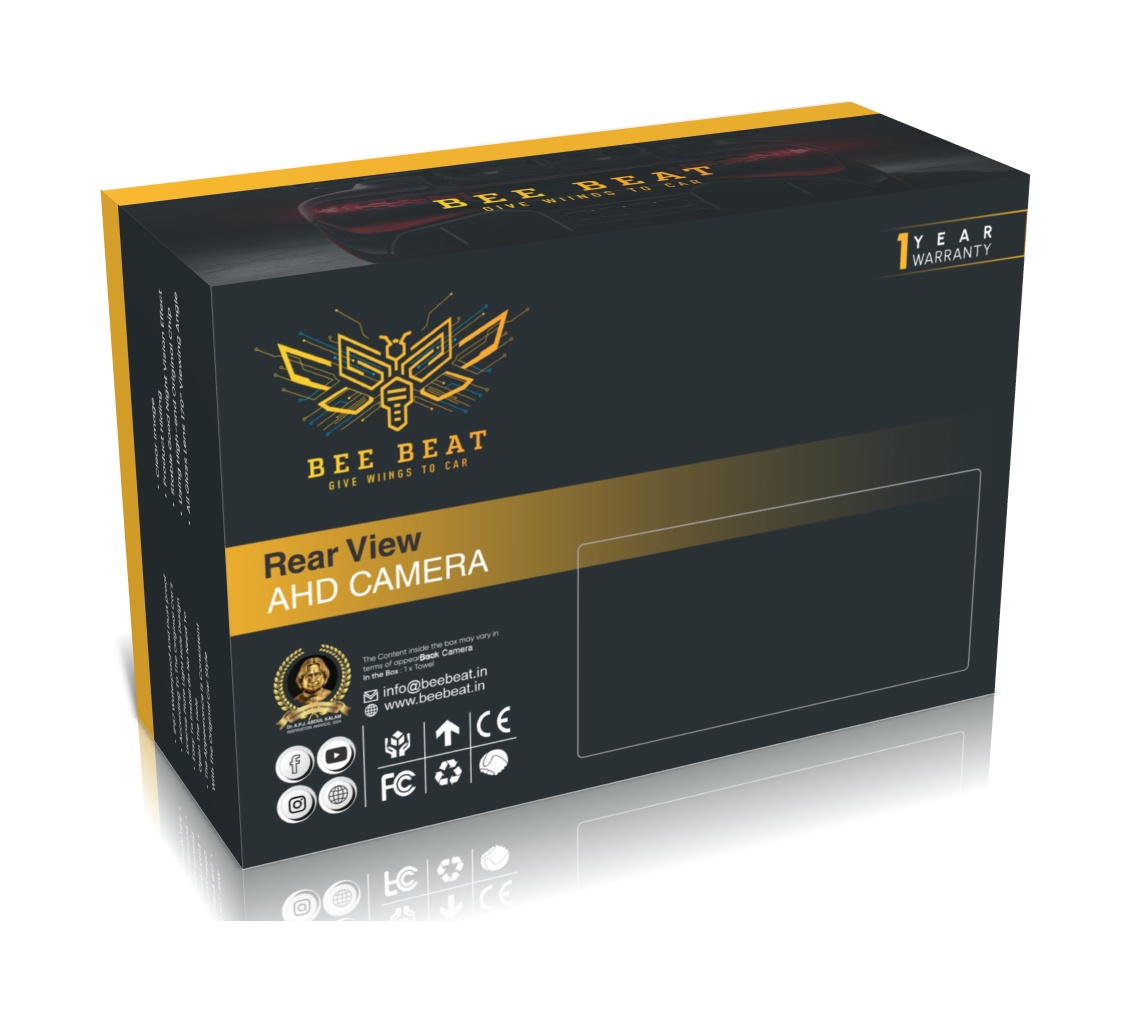
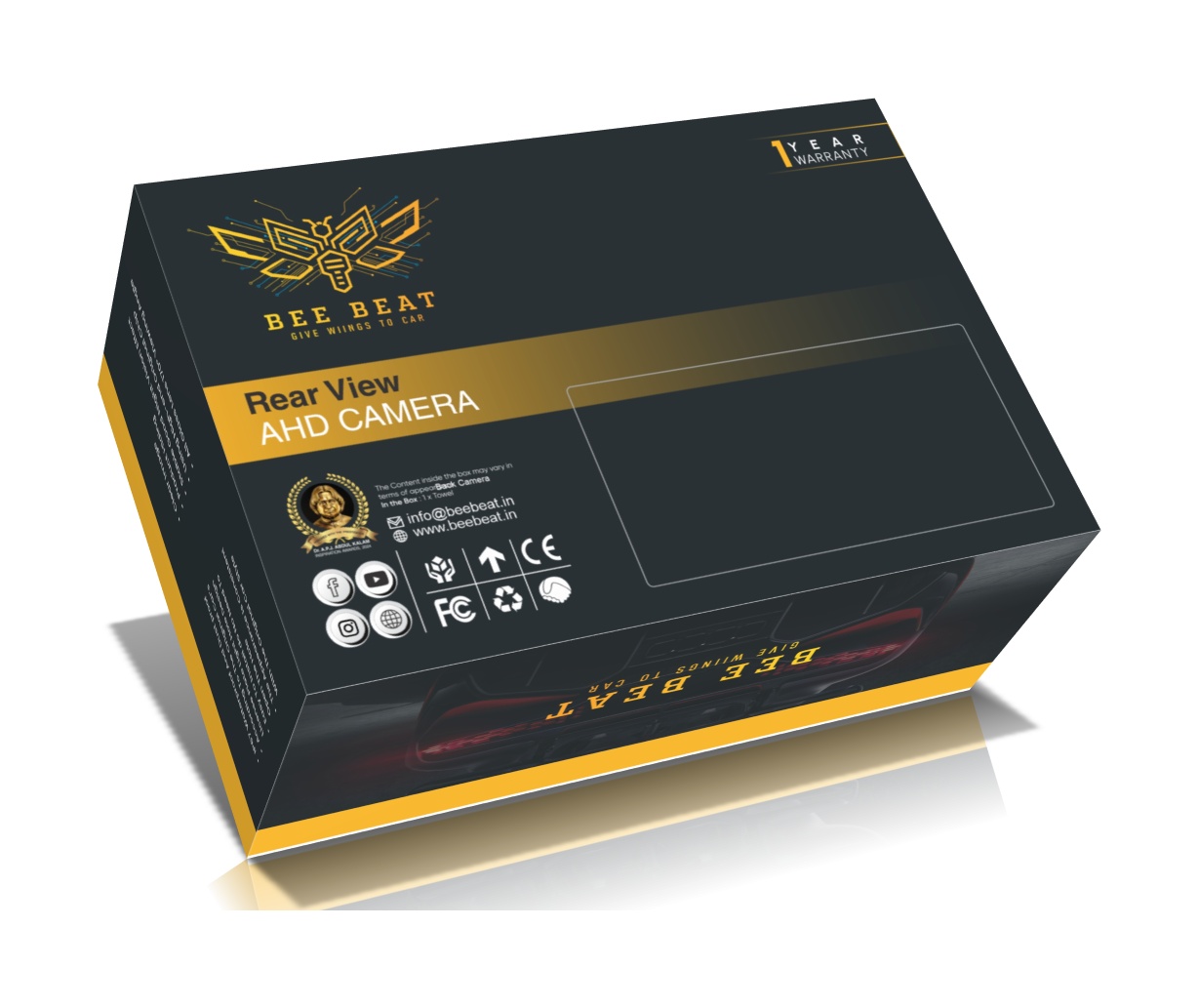
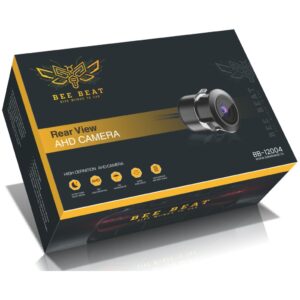
BEE BEAT * Universal Rear Bumper Camera with SD/CVBS Picture Quality BC DH2.1
₹1,500.00
SKU: camera
Angel:- 90 Degree
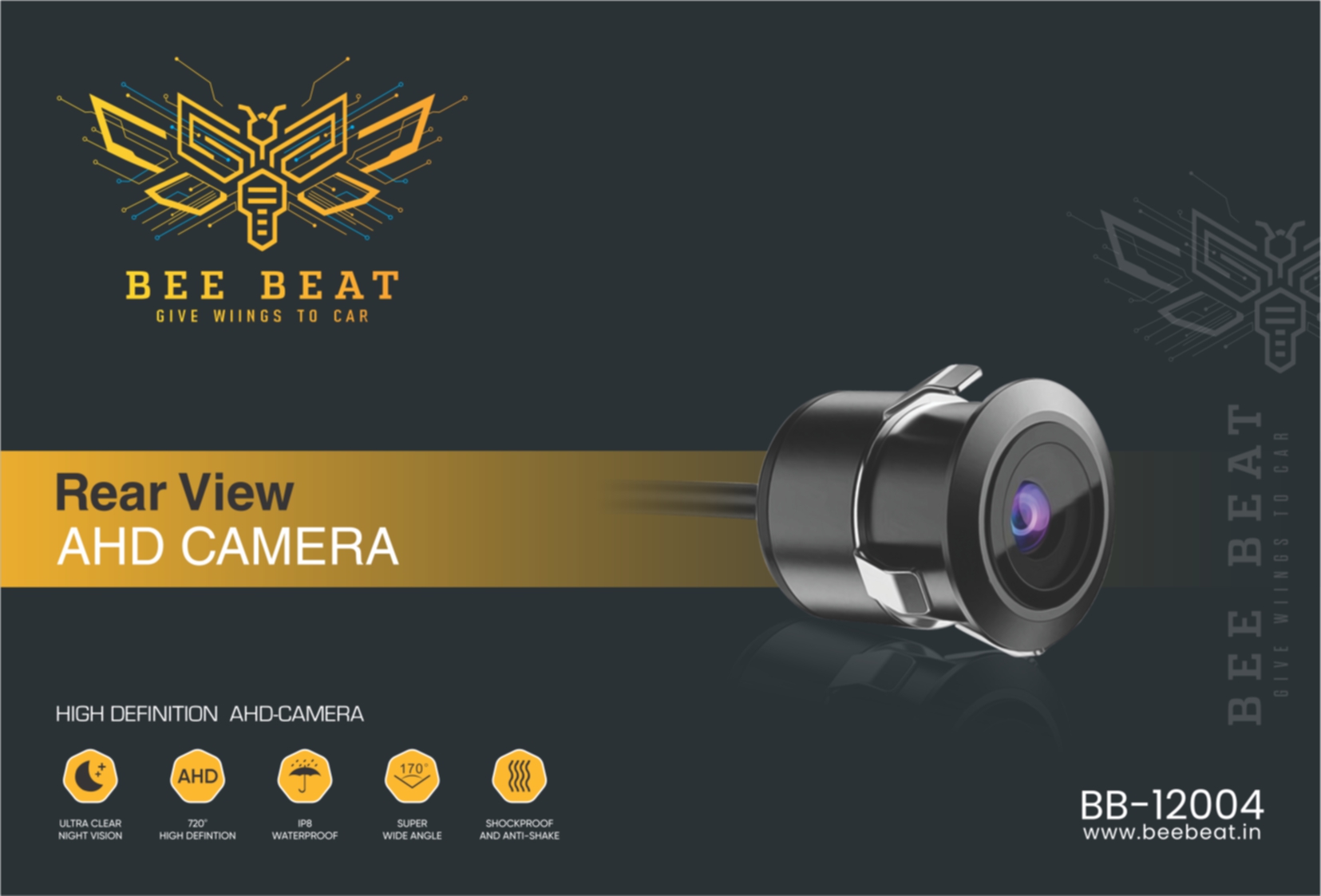
Backup Camera (also known as a reversing or rear-view camera) is
a safety feature designed to help drivers see directly behind their vehicle while reversing
It activates automatically when the car is shifted into reverse,
displaying a live video feed on the dashboard, rearview mirror, or center console screen.
Wide-Angle Lens: Most backup cameras use a fish-eye or wide-angle lens
(typically 140°–170°) to provide a broad view of the area behind the car, minimizing blind spots
Reverse Guidelines: Many systems include dynamic parking
guidelines (e.g., grid lines or distance markers) to help
with accurate parking and obstacle avoidance.
Night Vision: Infrared LEDs enable clear visibility in low-light or nighttime conditions, even when reverse lights are insufficient
Backup Camera (also known as a reversing or rear-view camera) is
a safety feature designed to help drivers see directly behind their vehicle while reversing
It activates automatically when the car is shifted into reverse,
displaying a live video feed on the dashboard, rearview mirror, or center console screen.
Wide-Angle Lens: Most backup cameras use a fish-eye or wide-angle lens
(typically 140°–170°) to provide a broad view of the area behind the car, minimizing blind spots
Reverse Guidelines: Many systems include dynamic parking
guidelines (e.g., grid lines or distance markers) to help
with accurate parking and obstacle avoidance.
Night Vision: Infrared LEDs enable clear visibility in low-light or nighttime conditions, even when reverse lights are insufficient
Car LED lights are high-efficiency semiconductor light sources that convert electrical
energy directly into light, offering superior brightness and durability compared
to traditional halogen bulbs.
They are widely used in both exterior applications like
headlights and fog lamps, and interior roles such as ambient mood lighting and functional cabin illumination
High Luminous Efficiency: LEDs convert approximately 80% of energy into light, whereas halogen bulbs lose about 80% as heat.
Instant Illumination: Unlike HID (xenon) lights that require a warm-up period, LEDs reach full brightness immediately. This is critical for brake lights, potentially reducing stopping distances by up to 5 meters at highway speeds.
Color Temperature: Most automotive LEDs operate at 6000K–6500K, producing a crisp white light that closely mimics natural daylight and reduces eye strain for the driver.
Car LED lights are high-efficiency semiconductor light sources that convert electrical
energy directly into light, offering superior brightness and durability compared
to traditional halogen bulbs.
They are widely used in both exterior applications like
headlights and fog lamps, and interior roles such as ambient mood lighting and functional cabin illumination
High Luminous Efficiency: LEDs convert approximately 80% of energy into light, whereas halogen bulbs lose about 80% as heat.
Instant Illumination: Unlike HID (xenon) lights that require a warm-up period, LEDs reach full brightness immediately. This is critical for brake lights, potentially reducing stopping distances by up to 5 meters at highway speeds.
Color Temperature: Most automotive LEDs operate at 6000K–6500K, producing a crisp white light that closely mimics natural daylight and reduces eye strain for the driver.
Car LED lights are high-efficiency semiconductor light sources that convert electrical
energy directly into light, offering superior brightness and durability compared
to traditional halogen bulbs.
They are widely used in both exterior applications like
headlights and fog lamps, and interior roles such as ambient mood lighting and functional cabin illumination
High Luminous Efficiency: LEDs convert approximately 80% of energy into light, whereas halogen bulbs lose about 80% as heat.
Instant Illumination: Unlike HID (xenon) lights that require a warm-up period, LEDs reach full brightness immediately. This is critical for brake lights, potentially reducing stopping distances by up to 5 meters at highway speeds.
Color Temperature: Most automotive LEDs operate at 6000K–6500K, producing a crisp white light that closely mimics natural daylight and reduces eye strain for the driver.
Quality repairs that you can trust every time means that you can rely on the repair services to fix your vehicle correctly, Efficiently, and safely. When you take your car